Furnace installation
Furnace replacement and installation in Spokane
A furnace is a short phone call and a long-term decision. This page covers what to settle before the old one comes out, so the new one suits a Spokane winter and your house.
(509) 461-5781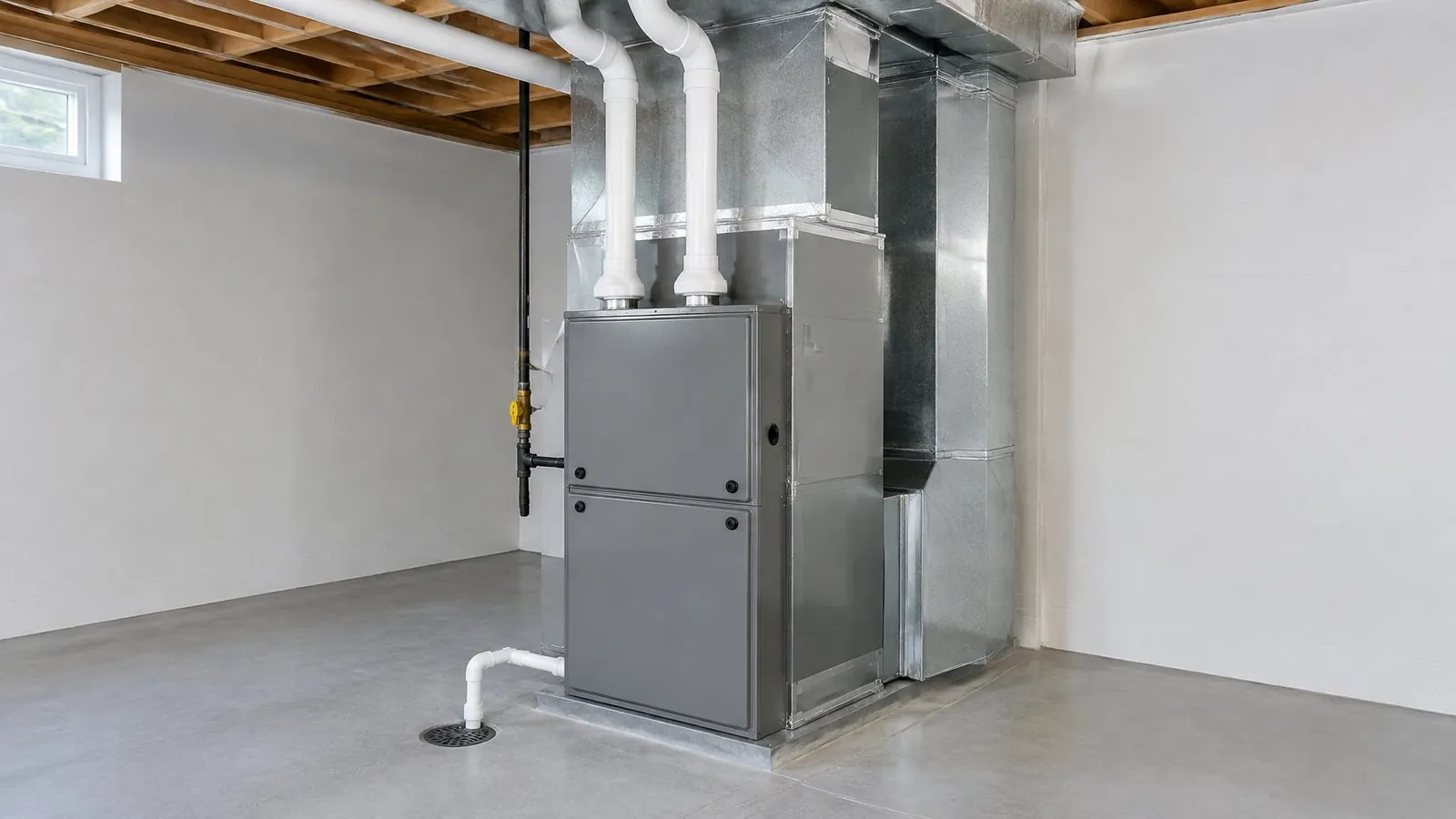
When replacement is the right call
Some furnaces announce the end clearly. Others just get expensive. Replacement usually comes up when:
- a technician finds a cracked heat exchanger or another fault that cannot be repaired safely
- the same unit needs a major part for the second or third winter running
- parts for that model are no longer made
- rooms stay cold no matter how long the furnace runs
- you are adding central AC and the old furnace blower cannot handle it
- a remodel or addition changes how much heat the house needs
If you are weighing the two, the repair or replace guide lays out the questions.
Sizing comes before the brand
The furnace has to match the house, not the old furnace. Older homes were often fitted with oversized units, and many have had new windows, insulation or additions since.
A proper replacement starts with a heat loss calculation, often called a Manual J. It looks at walls, windows, ceilings, air leakage and the local climate. Spokane needs a lot of heat by national standards: the 1991 to 2020 normals record about 6,460 heating degree days a year at the airport, against roughly 515 cooling degree days.
Too large a furnace heats in short bursts, which is hard on parts and leaves rooms uneven. Too small a furnace runs without stopping on the coldest nights and still falls behind. Ask how the contractor sized the unit, and be wary of any answer that boils down to matching the old label.
Degree-day figures: NOAA NCEI climate normals for Spokane International Airport.
Efficiency and venting
Furnace efficiency is stated as AFUE, the share of fuel energy that ends up as heat in the house over a season.
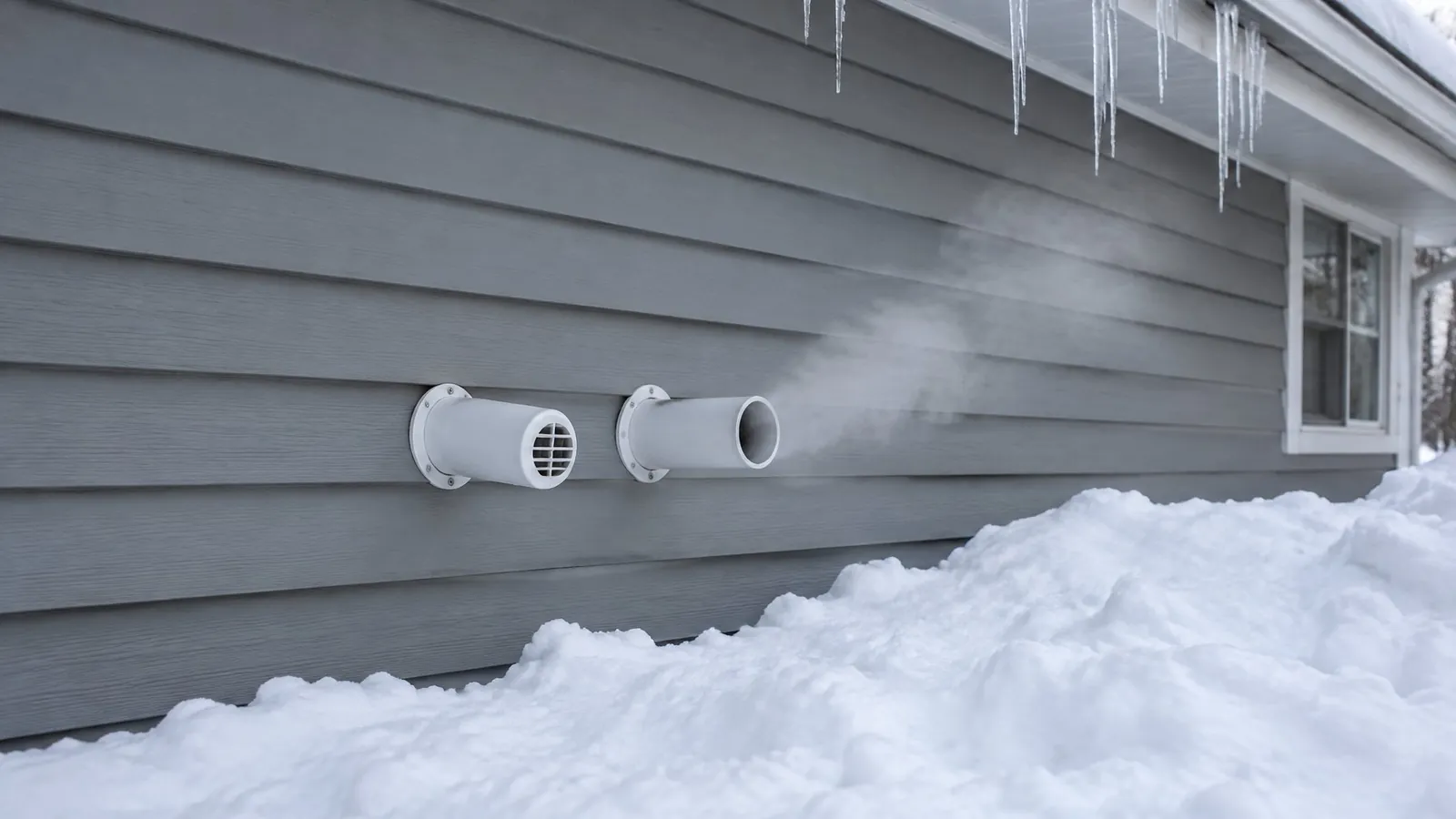
Mid-efficiency furnaces send hot exhaust up a metal flue or a chimney. High-efficiency condensing furnaces pull so much heat out of the exhaust that it leaves cool enough for plastic pipe, usually through a side wall or the roof, and they make water that needs a drain.
That choice has practical effects in a Spokane house:
- A condensing furnace needs a drain close by and a vent route that snow will not bury.
- Switching from a chimney to plastic venting can leave a gas water heater alone in an oversized chimney, which may need a liner.
- A condensing furnace in an unheated space needs its drain protected from freezing.
- Intake and exhaust terminals must keep the clearances the manufacturer lists from windows, doors and grade.
Single-stage, two-stage and variable-speed
A single-stage furnace is either fully on or off. A two-stage furnace runs at a lower fire most of the time and steps up when the weather turns hard. A variable-speed blower adjusts airflow smoothly and tends to run longer and quieter.
For a house with a basement furnace and long duct runs to the upstairs bedrooms, staging and blower control can matter as much as the efficiency rating. Ask the contractor to explain how the options would change comfort in your rooms, not just on paper.
Ducts, returns and filters
A new furnace pushes air through the same ducts as the old one. Undersized returns, crushed flex duct or leaky joints will hold back any furnace. A good bid says whether the ducts were looked at and what, if anything, should change.
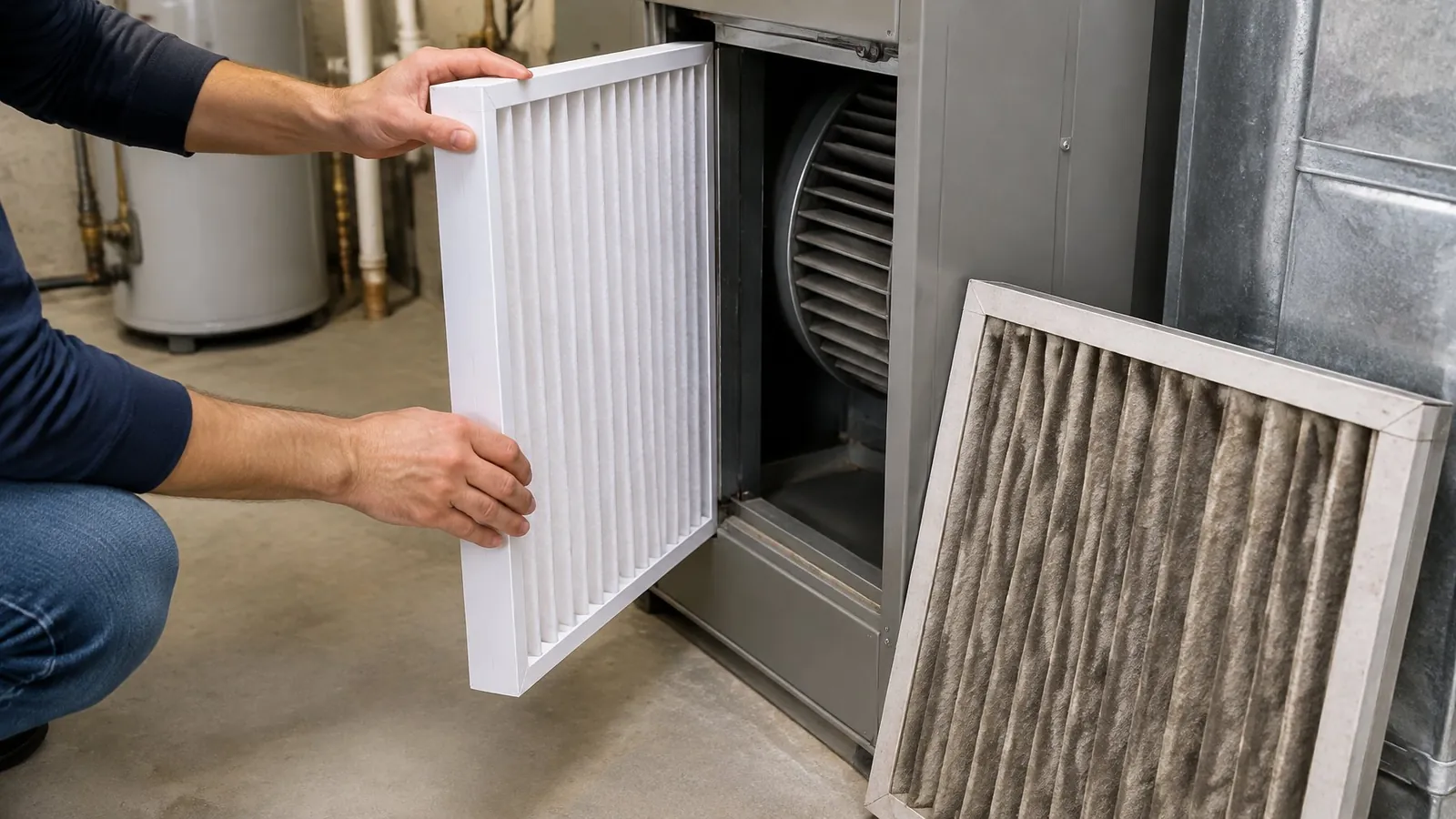
Filter racks are worth a word too. A deeper media filter cabinet can be added during an install and is often easier to live with than a thin filter changed every month.
Pairing heating with cooling
Replacing a furnace is the natural time to think about cooling. Central AC uses a coil that sits on top of the furnace, so matching the two at once avoids paying to open the system twice. See central AC installation.
Some homeowners also ask about a ducted heat pump paired with a gas furnace. The heat pump heats on milder days and cools in summer, and the furnace takes over when it gets cold. Whether that makes sense depends on the house, the ducts and your utility rates, which the contractor can walk through.
Permits, inspections and Washington licensing
Replacing a furnace is permitted work in the towns around Spokane. Airway Heights says in writing that a permit is required to install, move or replace a furnace, and Spokane Valley's mechanical permits cover replaced appliances as well as new ones. Ask who pulls the permit and when the inspection happens.
Washington also has two separate credentials to know about. HVAC contractors must be registered with the Department of Labor and Industries, and the electrical side of HVAC work falls under L&I's electrician certificates, which include an HVAC/refrigeration specialty. Check registration with L&I contractor verification.
Sources: City of Airway Heights, when is a permit required; City of Spokane Valley mechanical permits; L&I electrician certificates.
What install day usually looks like
Prep
Floors and the path to the furnace are covered, and gas and power to the old unit are shut off.
Removal
The old furnace comes out along with any venting that will not be reused.
Set and connect
The new furnace goes in, then the plenum, gas line, vent, drain, wiring and thermostat.
Start-up
The technician checks gas pressure, temperature rise, venting and safety controls.
Walk-through
You learn where the filter goes, what the lights mean and when the inspection is.
Questions to ask before you sign
Get two or three written bids if time allows. Compare what each one includes, not only the bottom line.
- What is your Washington contractor registration number?
- How did you size this furnace, and can I see the calculation?
- What exact model and efficiency are on the bid?
- Who pulls the permit, and is the inspection included?
- Will the venting, chimney or water heater need changes?
- Were the ducts and return air checked?
- Who registers the manufacturer's warranty, and what does it cover?
- What happens to the old furnace?
What moves the price of a new furnace
No two installs cost the same, and this site does not quote. The main drivers:
- the furnace size, efficiency and staging
- venting changes, such as new plastic pipe or a chimney liner
- duct, return or filter cabinet work
- access: a roomy basement is quicker than a tight closet
- whether central AC or a heat pump is replaced at the same time
- permit and inspection fees set by your city or the county
Common questions
How long does a furnace replacement take?
A straight swap is often a single visit. Venting changes, ductwork or adding AC can stretch it. Ask the contractor for their plan.
Can I stay in the house without heat that day?
Usually, yes. Plan for the heat to be off for much of the visit and keep pets and children clear of the work area.
Is a high-efficiency furnace always worth it?
It depends on how long you plan to stay, your gas use and whether the venting and drain work out. Ask for the options side by side.
Should the carbon monoxide alarms be checked too?
It is a good moment to. Washington requires CO alarms in most homes, with exceptions; the CO guide explains the rule.
Cold house in Spokane? Talk to a contractor now.
Dial the number and explain what the heat or cooling is doing. The person who picks up runs an independent HVAC business working in Spokane and the towns nearby.