Central AC
Central AC installation and replacement in Spokane
Many Spokane houses were built without air conditioning. If yours has a gas furnace and ducts, adding central air is mostly a matter of what sits on top of the furnace and what sits outside.
(509) 461-5781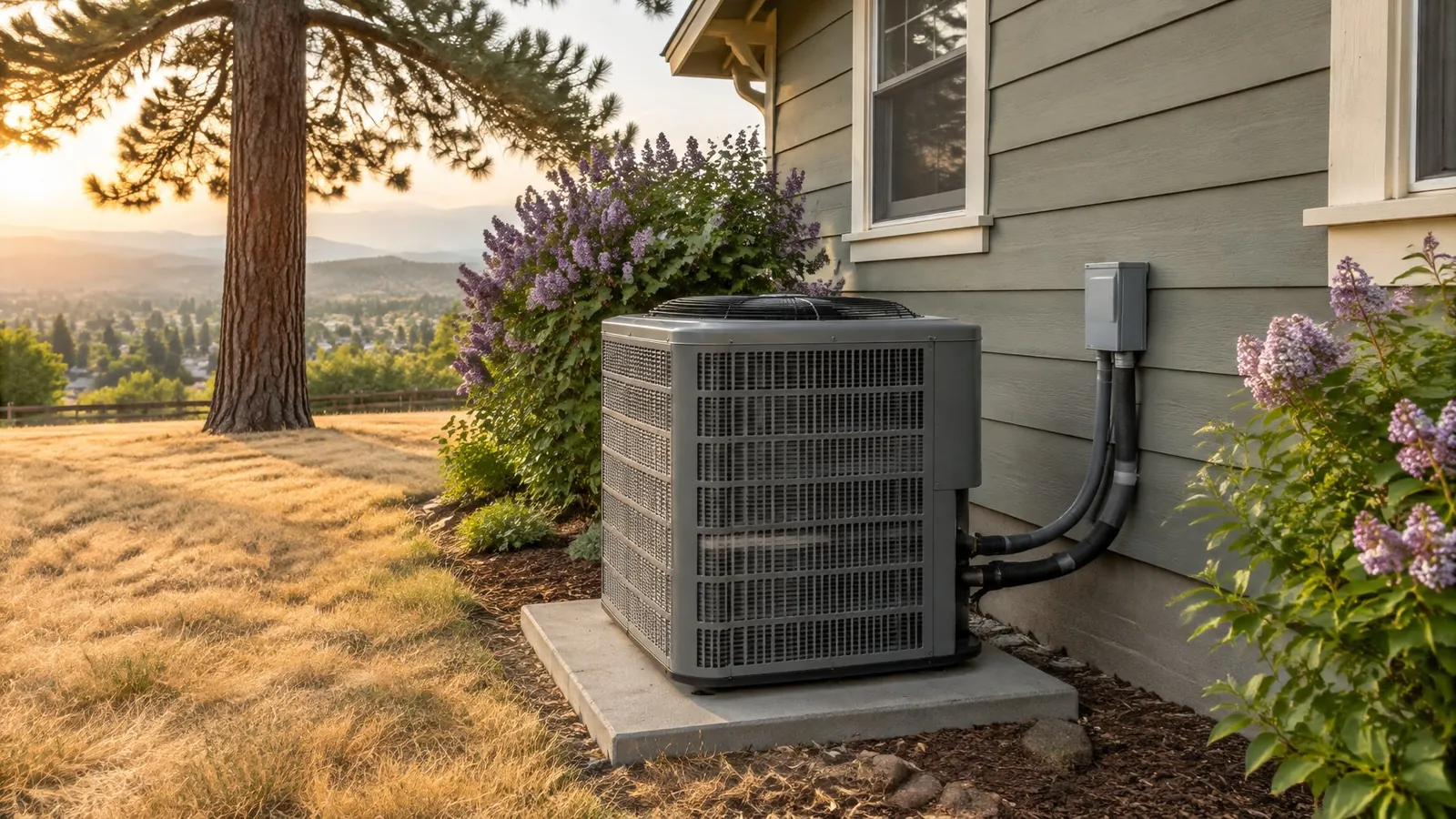
Adding central air to a furnace home
A split central system has two halves. An evaporator coil mounts on the furnace, in the supply plenum, and a condenser sits outside on a pad. Copper refrigerant lines and a control wire join them, and a dedicated electrical circuit with an outdoor disconnect feeds the condenser.
Before any of that, the contractor should confirm the furnace blower can move enough air for cooling and that the ducts reach the upstairs rooms, which are the hardest to cool in older two-story houses.
Replacing an old system
When the condenser fails on an older system, replacing only the outdoor half can leave a mismatched coil inside. Matched coil and condenser pairs are rated together, and a mismatch can cut efficiency and shorten the life of the new unit.
If the furnace is also near the end of its life, replacing both at once usually means one set of permits, one visit to open the plenum and equipment designed to work together.
Sizing for a short, warm season
Cooling loads in Spokane are modest next to the heating load. The climate normals record about 515 cooling degree days a year at the airport, compared with roughly 6,460 heating degree days. An AC sized by guesswork tends to come out too big, cooling the air quickly but running in short bursts.
A load calculation that looks at sun-facing windows, attic insulation and the duct layout gives a better answer than the size of the old unit.
Source: NOAA NCEI climate normals, Spokane International Airport.
A ducted heat pump as the outdoor half
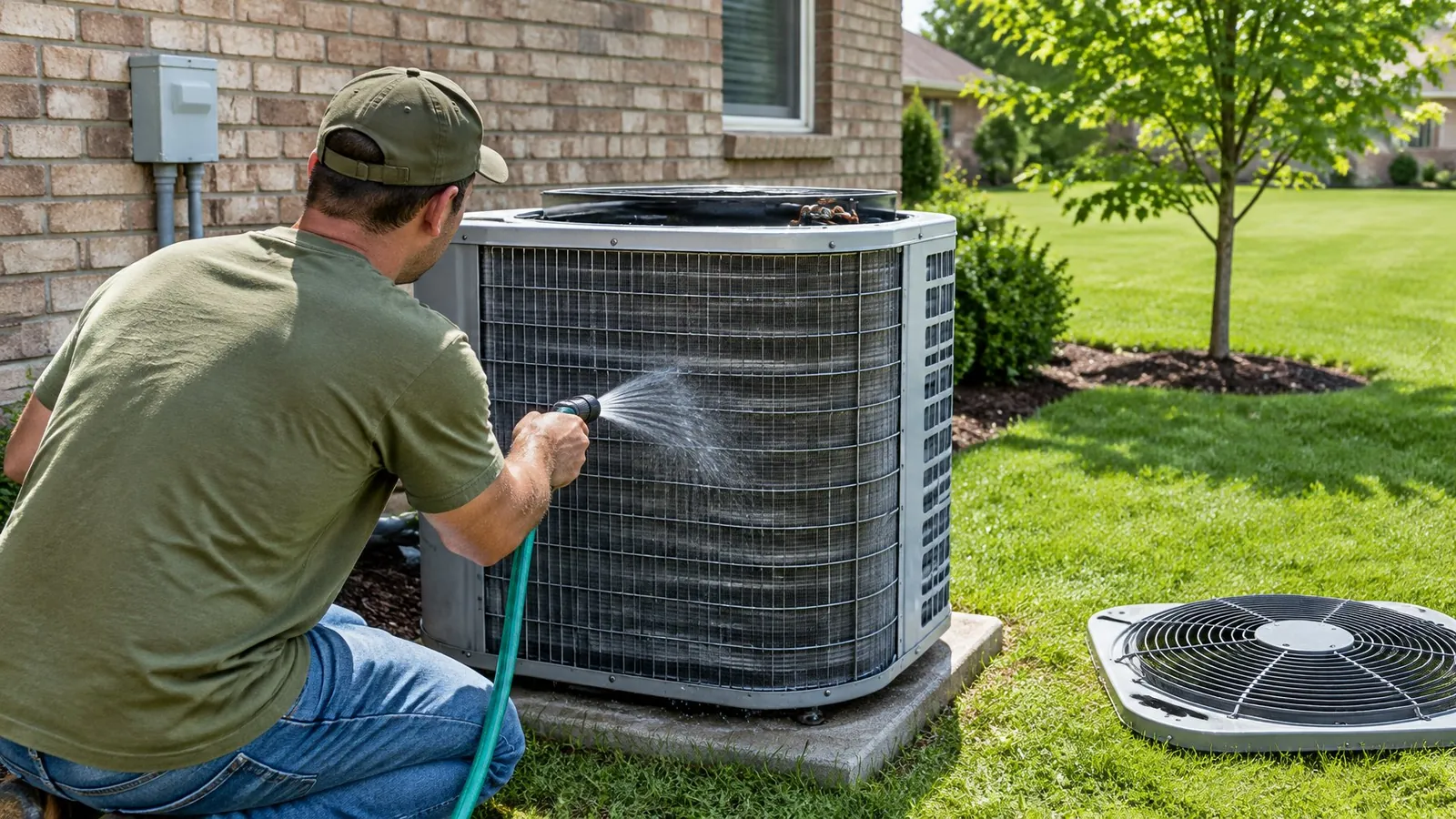
Instead of a straight AC condenser, some homeowners choose a ducted heat pump. It cools in summer the same way, and in milder heating weather it can run in reverse, with the gas furnace taking over on cold days. It uses the same coil location and ducts.
Whether it pays depends on electricity and gas rates, the house and how you use it. The contractor can compare the two on the same bid.
Electrical work, permits and registration
New AC needs a circuit and a disconnect, which is electrical work. In Washington, electrical work requires an L&I electrician certificate, and the HVAC/refrigeration specialty is one of the certificate types. Contractors also need L&I registration. Replacing an air conditioner needs a permit in Airway Heights, and Spokane Valley's mechanical permits cover replacements.
Ask who handles the electrical work and the permits, and confirm both are on the bid.
Sources: L&I electrician certificates; City of Airway Heights permits; City of Spokane Valley mechanical permits.
Questions for the bid
- Is the indoor coil being replaced, and is it matched to the condenser?
- How was the system sized?
- Where will the condenser sit, and how far from bedroom windows?
- Who runs the electrical circuit?
- Who pulls permits, and when is the inspection?
- What maintenance does the new system need each spring?
Common questions
Can AC be added if the house has no ducts?
Central air needs ducts. In a house heated by baseboards or radiators, ask a contractor what is practical; the answer depends on the house.
Should the furnace be replaced at the same time?
Not always. If the furnace is young and the blower is suitable, it can stay. If it is old, doing both together is often simpler.
Where these facts come from
Cold house in Spokane? Talk to a contractor now.
Dial the number and explain what the heat or cooling is doing. The person who picks up runs an independent HVAC business working in Spokane and the towns nearby.